

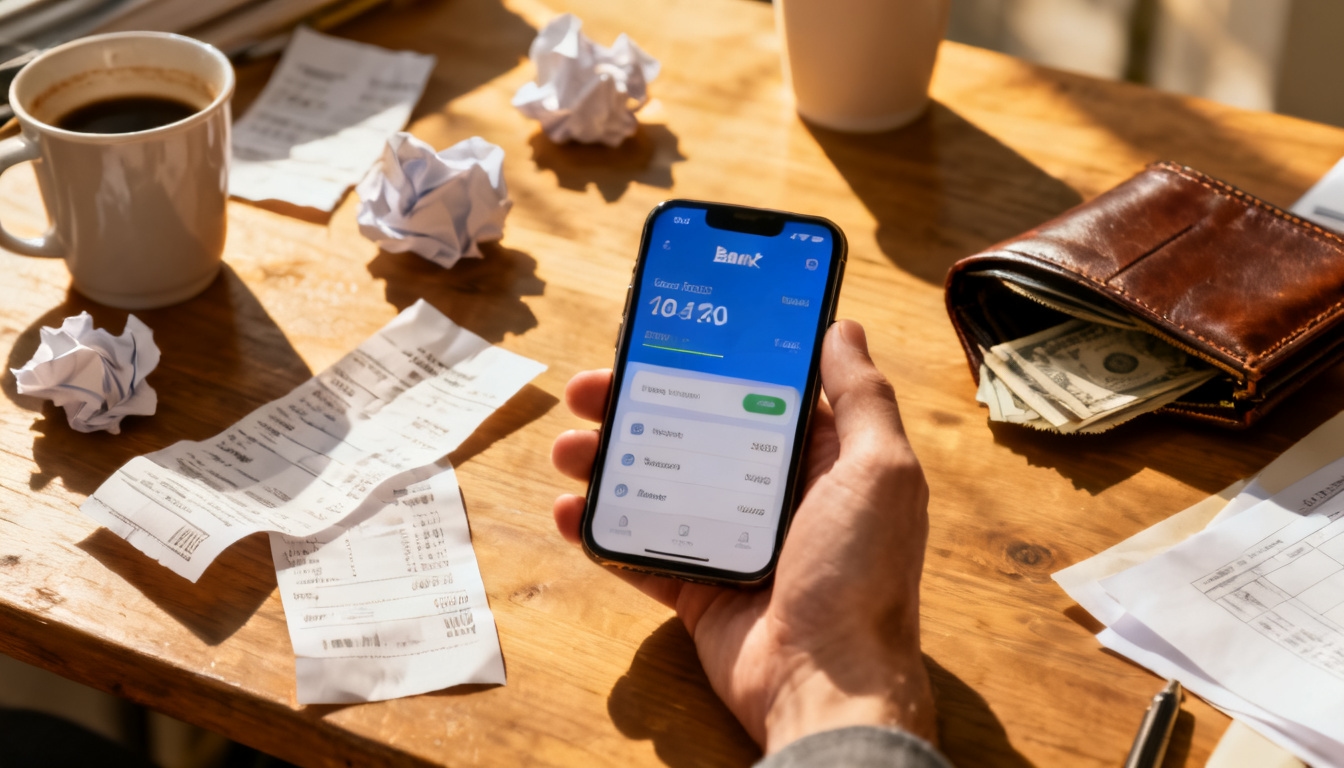
You check your account on a Tuesday and the balance already looks thinner than it should. Nothing dramatic happened, yet your money seems to disappear before the month even gets going. That feeling usually has less to do with bad luck and more to do with a repeating pattern that quietly runs your spending.
Why This Happens
Money rarely vanishes in one obvious moment. More often, it leaves through a series of small decisions that feel harmless while you are making them, then surprisingly expensive when they are stacked together. A lunch here, a delivery fee there, a subscription you forgot about, a refill at the store because you were already out, and suddenly the paycheck that felt solid a week ago is already under pressure.
That is why the question Why my money disappears so fast is usually the wrong mystery to solve first. The money is not disappearing. It is being routed through habits, timing, emotional impulses, and frictionless spending systems that make the loss feel invisible. When people say they are always broke, they are often describing a pattern of money behavior that repeats without much awareness.
A lot of this happens because daily life encourages spending in fragments. Apps remember your card, stores remember your preferences, and subscriptions remove the need for a decision at the moment of payment. You do not feel each purchase fully, so you do not feel the total until later. This is usually where people realize their money is not random; it is patterned.
There is also a psychological side. When life feels busy, stressful, or emotionally flat, spending can become a quick way to create relief, reward, or a sense of control. The problem is that the purchase solves the feeling for a moment but creates a new financial feeling later. If you have ever looked at your account and thought, I do not even know where it went, that is a clue that the behavior is happening faster than your attention.
Another reason money seems to vanish is that many people only look at the balance, not the behavior. A balance tells you the result. It does not tell you the pattern that caused it. That is why budgeting tools, spending trackers, and even a simple calculator can be useful; they make the invisible visible without turning it into a moral issue.
The Hidden Pattern Behind It
The hidden pattern is usually not one big bad habit. It is a cluster of small, predictable moments that follow the same emotional script. You feel a little behind, a little tired, a little deprived, or a little overstimulated, and spending becomes the fastest response available. Over time, the brain starts linking relief with checkout, which makes the cycle repeat more easily.
People often think they have an income problem when they actually have a timing problem, a leakage problem, or an awareness problem. Income may be enough in theory, but if most of it is spoken for by auto-renewals, food delivery, convenience purchases, and random weekends that cost more than expected, the month starts to feel smaller than it is. The feeling of scarcity can exist even when the numbers are not as bad as they seem.
The pattern often looks like this:
– You tell yourself you are being careful.
– You spend in many small, easy-to-justify places.
– You avoid looking too closely because it feels uncomfortable.
– The spending stays emotional instead of visible.
That emotional invisibility matters. When a purchase is tied to comfort, momentum, or identity, it does not register as a problem in the moment. A meal out feels deserved. A new item feels practical. A quick treat feels minor. But repeated enough times, these choices create the exact experience of Why my money disappears so fast.
There is also a subtle pattern of compensation. If life feels demanding, many people spend to make the day feel less heavy. If work feels draining, a small purchase feels like proof that the day had something in it for them. If the house feels chaotic, buying something can feel like restoring order. The cost is not only the dollars; it is the way spending becomes a coping strategy that never announces itself.
Common Mistakes People Make
One common mistake is assuming the issue is only discipline. That turns a behavioral pattern into a character judgment, which usually makes people defensive instead of observant. Most people do not need more shame. They need a clearer view of what is actually happening when the money leaves.
Another mistake is focusing on the largest expenses while ignoring the repeated smaller ones. Big expenses matter, but many budgets break because of the in-between spending that never feels important enough to track. It is the daily convenience spend, the forgotten renewal, the extra stop, the upgrade that did not seem like much at the time. The real damage often comes from repetition, not drama.
A third mistake is building a budget that only reflects intention, not behavior. A plan might say groceries should be one amount, but if stress shopping, takeout, and store runs keep happening, the budget is built on a version of life that does not exist. That is why people may download a budgeting tool, use it for a week, and then stop. The tool is not failing; it is exposing a mismatch.
A fourth mistake is not accounting for the money that disappears before the month starts. Annual fees, irregular bills, birthdays, school costs, car maintenance, and holiday spending all create pressure when they are treated as surprises. People feel like they are constantly reacting because they are. The money did not vanish suddenly; it was already scheduled to leave.
And then there is avoidance. Avoidance is expensive because it delays reality until reality becomes urgent. If you never check balances, never review statements, and never ask where the money went, you stay emotionally protected for a while, but financially blind. That comfort has a cost.
Real-Life Patterns and Behaviors
When people ask Why my money disappears so fast, they are often describing one of a few real-life money patterns that repeat in ordinary ways. These patterns are familiar because they are built into modern life, not because the person is careless. Recognizing them is the first step toward changing the outcome.
The first pattern is the permission loop. You work hard, feel tired, and give yourself permission to spend because you believe you have earned it. The spending feels emotionally fair, which makes it hard to question. Then the next purchase gets easier because the last one already lowered the threshold.
The second pattern is the convenience tax. It is not just about price; it is about paying extra to avoid friction. Delivery fees, faster shipping, takeout, rides, app purchases, and store-bought replacements all reduce effort in the moment. The body experiences relief, but the account experiences drain.
The third pattern is the invisible weekly leak. This is where money leaves in routines that feel normal: coffee runs, lunches out, pickup orders, small upgrades, online add-ons, and impulse buys that happen because you are already in motion. The total is hard to see because each item feels too small to matter.
The fourth pattern is the emotional rebound. After a hard day, a stressful conversation, or a week that feels disappointing, spending can feel like a reset button. It is not always about wanting things. Sometimes it is about wanting a different feeling, even for ten minutes.
The fifth pattern is the delayed shock. You spend during the week in a detached way, then look at the account on Friday or the first of the month and feel stunned. That emotional gap is important. It tells you the issue is not only the amount you spend, but the distance between the action and the awareness.
If you want to spot the pattern faster, look for these signals:
– Spending rises when you are tired or stressed.
– You justify purchases by telling yourself they are small.
– You feel surprise more often than confidence when checking your balance.
– You know the number, but not the behavior behind it.
This is where many people start to understand that their money habits are not random at all. They are predictable responses to pressure, convenience, and unmet emotional needs. Once you see that, the problem becomes more workable.
What Actually Helps
What actually helps is not a harsher budget. It is better visibility into the moments where money leaves without a decision. A good first step is to track the categories where spending feels least memorable. That might be food, subscriptions, gas stops, convenience shopping, or weekend spending. A basic budgeting tool can help, but only if it shows patterns instead of just numbers.
The next helpful move is to separate spending into planned and reactive. Planned spending is easier to accept because it has a role. Reactive spending often happens when your mood, fatigue, or environment pushes you into action before you think. When you label those moments, you stop treating every expense as equal.
A money calculator can also be surprisingly clarifying. If you think a small purchase is harmless, calculate what it becomes over a month. If you think a subscription is negligible, look at the yearly cost. That kind of clarity is not about guilt. It is about scale. Many financial problems get easier once the size of the habit is finally visible.
It also helps to create a pause between feeling and spending. Not a perfect pause, just a small one. Wait ten minutes before an impulse purchase. Review your cart before checkout. Walk away from the app and come back later. The goal is not self-denial; it is interrupting the automatic script long enough to choose differently.
Sometimes the most useful question is not What should I stop buying? but What am I trying to get from this purchase? Relief? Energy? Reward? Escape? Comfort? If you can name the function, you can find a cheaper or healthier way to meet it. That is where behavior changes become sustainable instead of performative.
You may also need to reduce friction in the other direction. Make savings automatic. Put recurring bills on a calendar. Use a tracking tool that shows what has already been spent this week. When your system makes good behavior easier than impulsive behavior, your odds improve without requiring constant willpower.
What To Do Next
Start with one honest review, not a full financial overhaul. Look at the last 30 days and ask where money left in ways you did not really notice at the time. Do not search for blame. Search for pattern. That shift alone can turn frustration into clarity.
Then choose one category to watch more closely for the next two weeks. It might be food, subscriptions, convenience purchases, or weekend spending. Use a simple tracker or budgeting tool to record only that category first. Narrow focus works better than trying to fix everything at once.
If you want a practical next step, run the numbers through a calculator and compare what you thought you were spending with what you actually spent. That comparison is often the moment the pattern becomes real. People do not change because they feel guilty. They change when the behavior becomes visible enough to understand.
And if this article sounded uncomfortably familiar, that is often a good sign. It means you are not dealing with random failure; you are looking at a repeatable money habit. The next step is not to be harder on yourself. It is to make the pattern easier to see, and then easier to interrupt.
Related Reading
- Why Is It So Hard to Save Money? The Pattern Explained
- Why Can’t I Manage My Money Properly? The Real Pattern
- Why Do I Struggle With Money So Much? The Pattern Behind It
Keep Exploring the Pattern
Watch more breakdowns of real-life money behavior on our YouTube channel.
If you want a clearer view of your monthly patterns, try the Salary Breakdown Calculator, the Subscription Cost Calculator, or the Bill Due Date Planner.
Disclaimer:
This content is for educational and informational purposes only and does not constitute financial advice. Always consult a qualified financial professional before making personal financial decisions.