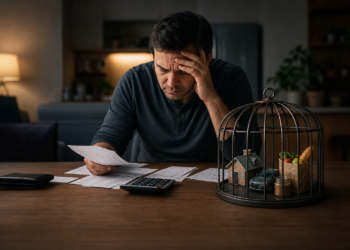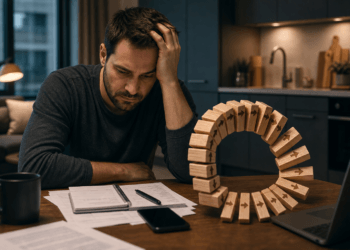


You buy something you used to want, and instead of feeling good, you just feel relieved it is over. That quiet shift is often the real answer to why men quietly stop enjoying spending money. It is rarely about being cheap; it is usually about pressure, responsibility, and a long memory of what money has cost them emotionally.
Why This Happens
A lot of men do not wake up one day and decide they no longer enjoy spending money. It usually happens slowly, in ordinary moments, until spending starts to feel less like a choice and more like a risk. A restaurant bill, a new tool, a weekend trip, even a small upgrade can begin to carry a strange emotional weight.
That weight is often tied to responsibility. Once money becomes linked to mortgage payments, family needs, debt, aging parents, or the simple fear of falling behind, spending can stop feeling light. The brain starts treating every purchase as a subtraction from safety, and enjoyment gets pushed out by vigilance.
This is why the question matters so much: why do men quietly stop enjoying spending money? Because the change is often invisible from the outside. They may still spend, still earn, still buy for others, but the emotional reward has faded. What remains is calculation, hesitation, and a growing sense that money should not be wasted.
There is also a cultural layer. Many men were taught to take money seriously, to avoid foolish decisions, and to measure worth through provision rather than pleasure. That creates a subtle tension: spending for joy can feel irresponsible, almost indulgent, even when the budget can handle it. Over time, enjoyment gets replaced by approval-seeking and self-monitoring.
The Hidden Pattern Behind It
The hidden pattern is not simply frugality. It is often emotional narrowing. A man may become more careful, more disciplined, and more outwardly stable, but inside he may be losing the ability to experience spending as something human and satisfying. The purchase still happens, but the pleasure does not land.
This pattern often begins when money starts representing identity. If he sees himself as the dependable one, the one who must not fail, then every expense is filtered through that role. Spending money on himself can trigger guilt because it clashes with the internal story that says his job is to preserve, provide, and endure.
In daily life, that can look like this:
– He delays buying something useful until it becomes a problem.
– He spends more easily on others than on himself.
– He feels a brief thrill at the idea of a purchase, then regret after it is made.
– He starts saying, I do not really need anything, even when he does.
This is usually where people realize their money is not random. It is patterned. The behavior is not about the item itself; it is about what the item represents. If spending has become tied to guilt, stress, or self-protection, the pleasure response gets muted before the transaction even happens.
Another part of the hidden pattern is decision fatigue. Men who carry a lot of financial responsibility often make hundreds of small money decisions each month. Over time, that constant mental load can drain the capacity for enjoyment. By the time they finally spend, they are not in a receptive state. They are tired, guarded, and trying not to make a mistake.
Common Mistakes People Make
One common mistake is assuming this is just about age. People say things like, You get older, you get more practical. Sometimes that is partly true, but it misses the emotional mechanism. Practicality is not the same as numbness. A man can become more mature with money without losing the ability to feel good about it.
Another mistake is framing the issue as selfishness. When men stop enjoying spending money, others sometimes assume they have become controlling or rigid. But very often the opposite is happening. They have internalized pressure so deeply that even harmless spending feels like a moral decision. That creates guilt, not freedom.
A third mistake is trying to fix the feeling with a big purchase. People think a vacation, a gadget, or a luxury item will bring the fun back. Sometimes it briefly does, but if the pattern underneath is fear or guilt, the pleasure fades quickly. The result is more disappointment, because the problem was never the size of the purchase.
Many men also make the mistake of ignoring small emotional leaks. They keep saying yes to obligations, emergencies, gifts, and practical expenses until the idea of spending for enjoyment feels almost disrespectful. By then, their financial life may look responsible on paper while feeling emotionally flat in real life. That mismatch is easy to miss if nobody names it.
Real-Life Patterns and Behaviors
In real life, this shows up in ways that are easy to overlook. A man might spend two hours comparing prices for something minor, then instantly approve a much larger expense for the family. He is not being inconsistent; he is expressing where guilt lives and where it does not. The personal purchase feels exposed, while the practical one feels justified.
Another common behavior is what you could call delayed permission. He wants something, thinks about it, and keeps talking himself out of it. By the time he finally buys it, the emotional window has closed. The item arrives, but the excitement is already gone, replaced by a sense that he should have waited longer or spent less.
This can also appear as over-control. He may keep track of every dollar, not because the money is scarce, but because control feels safer than enjoyment. Tracking tools and budgeting tools can help here, but only if they are used to reduce anxiety rather than intensify it. A good budget should create room to breathe, not a scoreboard of restraint.
Some men become better at spending on function than feeling. They will pay for maintenance, repairs, school needs, or family convenience without much trouble. But when it comes to a meal out, a hobby, a trip, or even a comfortable chair, the resistance rises. The pattern is clear: money is acceptable when it serves duty, and suspect when it serves pleasure.
The emotional result is often quiet resentment. Not loud, not dramatic, just a dull sense that life has become all inputs and no reward. That is one reason search terms like why do men stop enjoying money or why does spending money feel bad resonate so strongly. People recognize the feeling before they can explain it.
What Actually Helps
What helps is not forcing more spending. The goal is not to become careless. The goal is to understand what spending means in your mind, because behavior changes faster when the emotional story changes first.
A useful step is separating guilt from truth. Ask whether the discomfort is coming from actual financial strain or from learned caution. Those are not the same thing. A spending calculator, a simple budget tool, or a monthly tracking app can help reveal whether the fear is based in reality or habit. Sometimes the numbers are fine, but the nervous system has not gotten the message yet.
It also helps to create a category for enjoyment on purpose. Not a vague promise to treat yourself, but a small, specific line in the budget that is allowed to exist without apology. When enjoyment has a place in the plan, it stops feeling like a betrayal of responsibility. That is often the moment the tension starts to loosen.
Another helpful shift is noticing the order of the reaction. If you feel relief after spending but not joy, that is a clue. Relief usually means a burden was removed. Joy usually means the purchase matched a genuine desire. Learning the difference can make spending feel more intentional and less emotionally confusing.
The point is not to spend more for its own sake. It is to make sure money still has a human purpose. When every dollar is assigned to protection, the person using the money disappears from the picture. Healthy money behavior leaves room for both duty and satisfaction.
What To Do Next
Start by looking at one month of spending without judging it. Notice where you felt tension, where you felt guilt, and where you felt nothing at all. Patterns show up quickly when you stop treating every purchase as a one-time event and start reading it as behavior.
Then ask one honest question: am I avoiding spending because the money is tight, or because spending has started to feel emotionally unsafe? That distinction matters more than most people realize. It changes whether you need a tighter budget, a better system, or simply more permission to enjoy what is already there.
If you want a calmer next step, use a budgeting tool or simple spending tracker to separate facts from feelings. A good calculator can show you what is actually affordable, which often reduces the background anxiety that makes spending feel heavier than it is. Once the numbers are clear, the emotional pattern becomes easier to see.
And if this article sounded familiar, that is probably because you have been living a pattern, not just making purchases. You do not need to overhaul everything at once. Start small, look honestly, and use one tool that gives you clarity. That alone can make spending feel less like pressure and more like a choice.
Related Reading
- Why Men Stop Feeling Excited About Money Quietly
- Why Men Quietly Fear Running Out of Money Eventually
- Why Men Over 40 Quietly Worry About Inflation
Keep Exploring the Pattern
Watch more breakdowns of real-life money behavior on our YouTube channel.
Browse the full Money Behavior Library to explore more patterns like this one.
If you want a clearer view of your monthly patterns, try the Salary Breakdown Calculator, the Subscription Cost Calculator, or the Bill Due Date Planner.
Explore more patterns in the Money Behavior Library — a growing collection of real-life financial patterns explained clearly.
Disclaimer:
This content is for educational and informational purposes only and does not constitute financial advice. Always consult a qualified financial professional before making personal financial decisions.