

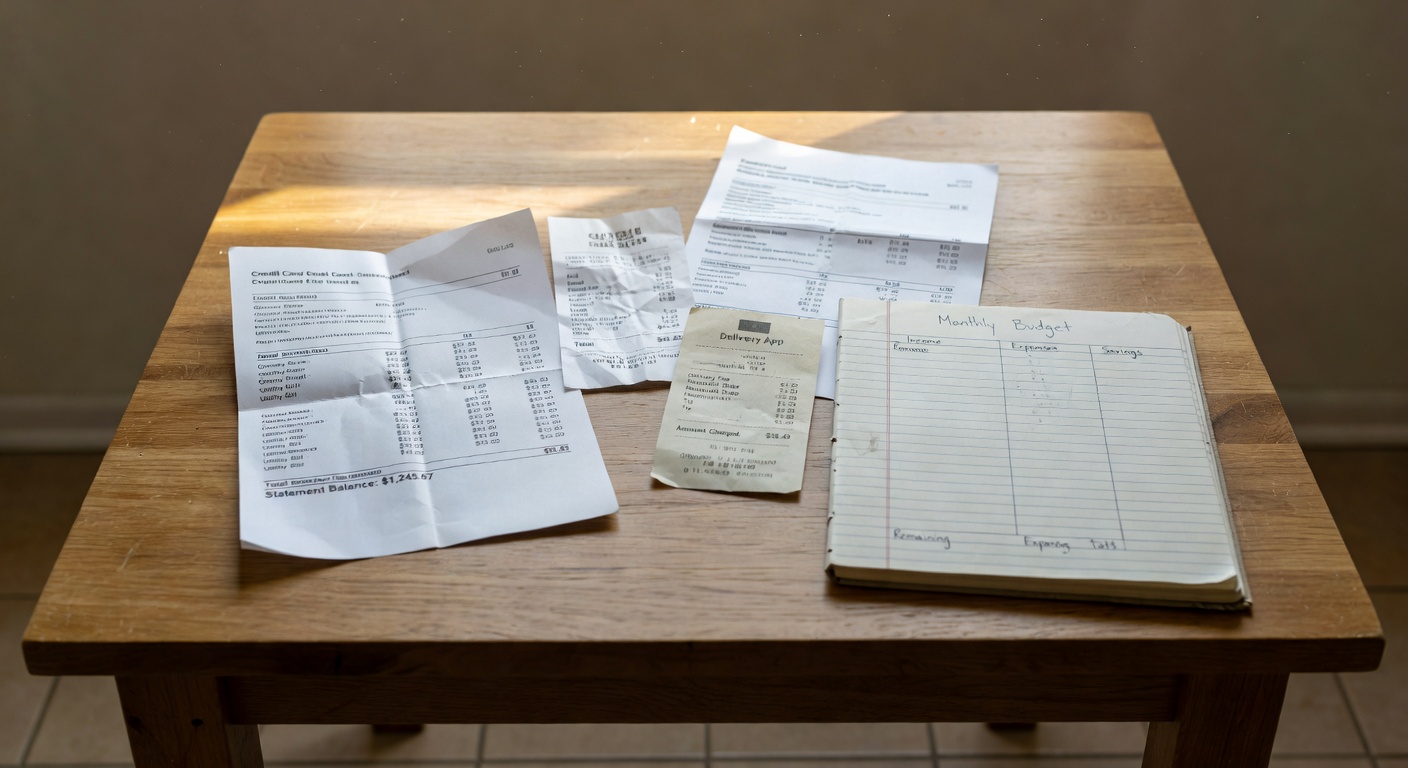
The grocery receipt looked normal, the streaming charges were small, and the delivery app orders never felt like much in the moment. Then the credit card bill arrives and the monthly budget suddenly looks different from the one that existed in mid-month. The numbers were moving the whole time, just not in a way that stayed visible.
Why This Happens
The first reason this happens is that a monthly budget often feels more real on payday than it does three weeks later. At the start of the month, the bank balance looks orderly, the credit card feels like a convenient payment method, and the plan seems steady enough to hold. By the time the bill arrives, the spending has already happened in dozens of small decisions, and the account is only now collecting the full story. That is usually where it starts.
The phrase credit card bill surprise is fitting because the surprise is rarely caused by one large purchase. It is more often the result of ordinary spending that was easy to ignore while it was still split across days and categories. A coffee here, a grocery top-up there, a quick online order, a subscription renewal that barely registered, and then a couple of convenience purchases after a long day can quietly build into a balance that feels larger than expected. The spending was visible in pieces, but not visible as a whole.
There is also a psychological gap between the moment of purchase and the moment of payment. When the card is tapped, the brain often treats the expense as small, delayed, or abstract because the cash does not leave immediately. That delay can make the spending feel manageable even when it is steadily pushing the monthly budget away from the original plan. The bill later becomes the first time all of those separate choices are forced into one clear number.
This is especially easy to miss when the spending fits into everyday routines. A person may see themselves as careful because they compare prices, avoid obvious splurges, and keep an eye on the checking account. Yet the card statement may still capture food delivery, pharmacy runs, online returns that became new purchases, and household items bought in scattered trips instead of one planned shop. The gap is not always about discipline; it is often about how the month is experienced in fragments.
The other part of the pattern is that many budgets are built around intention, not timing. A household may know what it wants to spend on groceries, insurance, gas, and debt payments, but the month rarely behaves in clean categories. Timing matters more than people expect, because a car repair, a school fee, a bigger utility bill, or one extra restaurant meal can cluster at the wrong point in the cycle. The budget can look fine on paper while the credit card balance is already building a different result.
Common Mistakes People Make
One common pattern is treating the credit card like a record of purchases rather than a running total. The card gets used for convenience, then the person assumes the total will still settle somewhere close to the budgeted amount. That feels reasonable in the moment because each charge seems small enough on its own. The problem is that the statement only tells the truth after the month has finished writing itself.
A second pattern shows up when people check their finances only at the beginning of the month or only after payday. The early check creates a false sense of control, while the late check creates surprise and catch-up behavior. In between, the spending can drift without much attention because no one is watching the full sequence unfold. This is the part that tends to go unnoticed.
A third pattern is using the card for ordinary life while mentally separating it from the monthly budget. Grocery trips, fuel, child-related costs, and small online purchases can all feel like necessary expenses, which they often are. But when those purchases are mentally filed away as exceptions, the statement becomes larger than the plan in a way that feels almost mysterious. The budget was never wrong in principle; it was just not tracking the same reality as the card.
The first pattern leads to a common form of self-surprise, where the person genuinely believes spending was controlled because nothing felt dramatic. The second pattern encourages a false rhythm, where money seems manageable in the opening days and disordered only at the end. The third pattern can create a sense that the budget failed suddenly, when in fact the gap had been widening in quiet increments. That disconnect can make even careful people feel as if they missed something obvious.
What makes these habits so sticky is that they are efficient in the short term. Credit cards are easy to use, statements arrive later, and budgeting attention naturally fades once the day gets busy. A person can be responsible in one part of life and still let the month run ahead in another. The spending does not have to be reckless to become hard to reconcile.
These habits are also reinforced by the design of modern payments. Tap-to-pay, saved cards, automatic renewals, and one-click checkout reduce friction at the exact point where reflection would help. A purchase that takes five seconds does not invite much pause, but the balance it creates will wait until the end of the billing cycle. That is why the bill often feels like a verdict when it is really a delayed summary.
Real-Life Patterns and Behaviors
A familiar version of this starts with grocery shopping. A person goes in with a plan, but the cart picks up extra items because dinner needs adjusting, lunch ingredients are low, and a few household products have quietly run out. None of the additions seem unreasonable, and the receipt still looks like everyday life. The credit card bill, however, turns those separate decisions into a larger monthly total than the budget ever expected.
Delivery app spending creates a different kind of drift because the order never feels like a full meal cost while it is being placed. A small fee, a service charge, a tip, and a menu total that looked modest at first can become a repeated pattern in the same month. The transaction feels isolated each time, which is why it is easy to underestimate. That is one of the reasons the credit card bill arrives feeling larger than the person thought it should be.
Subscription renewals behave quietly and are often forgotten until they appear on the statement. Streaming services, storage plans, apps, and memberships can all renew in the background while the budget focuses on more obvious bills like rent, insurance, and utilities. The charge is not large enough to attract attention on its own, but it still counts against the monthly budget just the same. The account may look stable until these small renewals are added together.
Late-night scrolling also matters more than it seems. After a long day, purchases made on a phone tend to feel abstract and emotionally lighter than the same item bought deliberately during the day. A person may not be seeking a big purchase at all, only something convenient, fast, or reassuring. The credit card bill later reveals that comfort and fatigue can be a spending category of their own.
Payday moments can create a temporary sense that everything is under control, which is why the middle of the month often becomes the danger zone. The checking account is replenished, the balance looks healthier, and the credit card has not yet delivered its summary. Then the regular bills, small purchases, and delayed charges catch up at once. The budget still exists, but it is no longer the same version that felt safe after payday.
These patterns are easy to recognize once they are named, and that is part of why they keep repeating. The spending rarely feels dramatic when it happens, which makes it hard to react to in real time. A person can be looking at a bank app, a credit card app, and a budget tracker and still not see the month as one connected sequence. The card statement is often the first place where the full pattern becomes visible.
What Actually Helps
What helps first is a more honest version of the monthly budget, one that includes the spending that tends to disappear between checks. That does not mean making the budget stricter in a dramatic way; it means making it more connected to how life actually moves. When recurring charges, grocery patterns, gas, and routine convenience purchases are treated as part of normal spending instead of exceptions, the statement becomes less surprising. The budget starts to resemble the month instead of the wish for the month.
It also helps to look at credit card activity before the bill arrives, not just after. A mid-month review does not solve everything, but it can expose the gap while there is still time to adjust the rest of the month. That matters because the emotional shock of the statement often comes from seeing the total only when the choices are already locked in. Early visibility makes the numbers feel less like a reveal and more like a summary in progress.
A separate cash or debit category for flexible spending can make the difference between planned comfort and blurred spending. When every extra coffee, takeout order, or convenience purchase lands on the same card, the total becomes harder to sense until the end. Giving those expenses a visible limit creates a clearer boundary, even if the amount is not perfect. The point is not to eliminate flexibility, but to let the monthly budget see it coming.
It can also help to separate ordinary bills from the charges that change from month to month. Fixed payments such as insurance, debt payments, and subscription renewals are easier to prepare for when they are treated as recurring commitments rather than background noise. Variable spending needs a different kind of attention because it changes with stress, weather, schedule, and habit. When those categories stay mixed together, the credit card statement tends to feel larger than expected even if the overall spending was not out of control.
For people carrying a balance, the bill becomes harder to ignore when interest starts layering onto purchases that already felt small at the time. That does not mean every balance is a sign of poor judgment; for many households, credit cards simply absorb the gap between paydays and real life. Still, the size of the balance matters because it changes the next month before that month even begins. The card is not only recording spending; it is shaping the starting point for the next cycle.
A final adjustment is to treat the statement as information rather than as a verdict. That shift sounds simple, but it changes the emotional weight of the moment. The bill is usually showing timing, patterns, and blind spots more than failure. The month is often the thing that moved, not the person who looked at it too early.
The balance remembers the sequence, even when the person making the purchases does not.
Related Reading
- Why You Keep Delaying Bills—Even When You Know They’re Due (Decision Fatigue)
- Family Getaway Costs More When the Itinerary Shifts
- Managing Family Budgets Around Unexpected School Costs
Keep Exploring the Pattern
Watch more breakdowns of real-life money behavior on our YouTube channel.
If bill timing keeps creating pressure, try the Bill Due Date Planner to map out when your payments hit each month.
Disclaimer:
This content is for educational and informational purposes only and does not constitute financial advice. Always consult a qualified financial professional before making personal financial decisions.