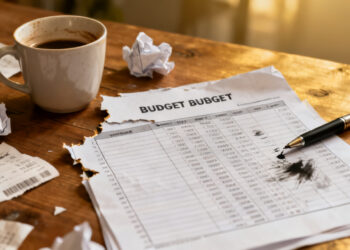


The card statement lands after a week of grocery runs, a repair bill, and a subscription renewal that had been easy to ignore. The emergency fund was supposed to absorb that kind of week, but the number on the screen makes the buffer look smaller than it felt a few days ago.
Why This Happens
An emergency fund is meant to turn a rough week into something manageable, but short-term thinking often changes the shape of the money before the emergency ever arrives. The fund may exist, yet it has been built around the idea that one unexpected bill is the most likely event, not three in close succession. That expectation feels reasonable in the moment, which is exactly why it holds up until the account is tested. The gap only becomes visible when the spending pace and the savings pace are no longer speaking to each other.
A lot of people do not build their emergency fund with the full rhythm of real life in mind. They picture one repair, one medical copay, or one car issue, and they do not mentally stack the grocery bill, the school expense, the prescription refill, and the auto maintenance into the same week. That is not carelessness so much as a normal human bias toward the next immediate need. The account looks prepared right up until the month starts collecting small demands all at once.
There is also a habit of treating savings like a static number instead of a working cushion. Money sits in a savings account, so it can feel as if it is already doing its job even when the household budget has been quietly pulling from the same margin in other ways. Subscription renewals, delivery app charges, convenience purchases, and “just this once” spending all reduce the room that was supposed to be reserved for disruption. That is usually where it starts.
Research from Vanguard notes that 36% of Americans would struggle to cover an unexpected $400 expense, which helps explain why a small setback can feel bigger than it should. A short-term mindset tends to focus on surviving the current week rather than protecting the next one, so the emergency fund gets built in fragments. It may have been enough when it was first funded, but enough is a moving target when the cost of living keeps arriving in pieces. The balance still looks real; the margin does not.
The tension is that the fund is often judged by intention rather than by what the month actually asks for. A person can fully mean to save responsibly and still end up with a buffer that collapses under layered expenses, because the plan was built for a neat story and life arrived with overlap. This is the part that tends to go unnoticed. An emergency fund is not only about having savings; it is about whether the savings can survive the way expenses actually cluster.
Common Mistakes People Make
The first pattern is treating the emergency fund as proof that the budget is covered, even when the budget itself has started to loosen. That can lead to a false sense of distance from everyday spending, because the savings account looks separate while the monthly budget quietly absorbs more than expected. When that happens, the fund becomes the backstop for habits that should have been contained elsewhere. The intention is to protect savings, but the behavior sends too many small leaks through the same door.
A second pattern is counting on one month’s calm to offset the next month’s unpredictability. After a good payday or a quieter stretch, it can feel sensible to relax the pace of saving or to use extra cash for routine comfort purchases. Then the next week arrives with a tire repair, a higher grocery total, or a health appointment that had been easy to postpone in the mind. The problem is not the individual purchase; it is the assumption that a quiet week means the account has room to breathe.
A third pattern is dipping into the emergency fund for anything that feels urgent in the moment, even when the expense is predictable with enough distance. Annual bills, holiday costs, car registration, and back-to-school spending can all get treated like emergencies because they arrive with enough force to disrupt the checking account. That creates a blur between true surprises and foreseeable expenses, which makes the savings account carry more weight than it was ever meant to hold. The account stays busy, but not necessarily protected.
These habits are not usually dramatic. They form through convenience, fatigue, and the desire to make the current week feel manageable without reworking the whole budget. The result is a savings buffer that keeps getting asked to solve for timing, not only for hardship. There is a subtle tension there: the money was saved for disruption, yet it keeps getting used to smooth over the ordinary friction of life.
What makes this especially familiar is that none of it feels reckless while it is happening. A grocery run seems harmless, a small delivery fee seems easier than another errand, and a subscription renewal seems too minor to bother with. Then a real expense lands, and the emergency fund has already been carrying too many small assignments. That is how a buffer can look healthy on paper while acting tired in practice.
The deeper issue is that short-term thinking prefers immediate relief over structural consistency. It is easier to cover today and hope the next paycheck restores the balance than to slow spending in a way that feels noticeable right away. That does not mean the household is ignoring the future; it usually means the present is louder. The savings account ends up absorbing the cost of that loudness.
Real-Life Patterns and Behaviors
The most recognizable version of this shows up after a costly week that begins with something ordinary. A grocery trip is a little higher than planned, then the gas tank needs filling, and then a small car repair lands before the weekend. Each item seems manageable alone, which is why the emergency fund may not even come to mind until the bank balance is already thinner. By the time the numbers are checked again, the buffer is doing the work of three separate decisions.
There is a similar pattern around payday, when the account briefly feels open and flexible. A person catches up on a few purchases, pays off what is due, maybe orders delivery because the week has already felt full, and assumes the next stretch will be calmer. Then the calendar keeps moving and the expected breathing room never really shows up. The emergency fund can get pulled into that gap, not because of one bad choice, but because the month was already overcommitted in small ways.
Late-night scrolling can also shape how the emergency fund gets used, even though it does not look like finance behavior at first. A small purchase made in a tired state often feels easier than facing a fuller budget conversation the next day. The receipt arrives later, but the decision was already made when focus was low and convenience was high. That is the quiet part of short-term thinking: it favors relief now and leaves the account to explain the difference later.
Subscription renewals are another place where the pattern becomes visible. A streaming charge, an app fee, or a service that seemed harmless during sign-up can shrink the margin in a savings account without feeling meaningful at the time. The amount is rarely the whole story; it is the accumulation that matters. The emergency fund does not usually fail in one event, but in the slow erosion that makes an ordinary bill feel like a larger event than it should be.
This is also where mid-month balance checks start to tell a different story than the first-week version. The checking account may still show activity, the credit card may still be usable, and the savings balance may look untouched at a glance. Yet the money already has assignments attached to it, and some of those assignments are less visible than the emergency itself. That is the part that tends to catch people off guard: the fund was never empty, just already spoken for.
For many households, the tension is not between saving and spending in a simple sense. It is between the life that gets planned and the life that actually shows up with timing problems, clustered expenses, and convenience purchases that solve one moment while weakening the next. Grocery runs, bill payments, delivery app spending, and a savings account all sit in the same system, even when they are treated separately. The emergency fund then becomes the place where all those moving parts meet.
What Actually Helps
What helps most is not a grand reset, but a clearer relationship between the emergency fund and the rest of the monthly budget. When the buffer is treated as a separate layer instead of a flexible extension of everyday spending, it is easier to see what belongs there and what does not. That matters because a savings account can only do its job if it is not constantly asked to cover routine friction. The point is not perfection; it is reducing the number of jobs the fund has to perform at once.
It also helps to think in terms of expense patterns rather than rare disasters. A household that knows it tends to face clustered grocery costs, seasonal car repairs, or irregular insurance payments can make better sense of why the emergency fund feels smaller than expected. The issue is often not the size of one bill, but the way several ordinary bills collide before the next paycheck. That recognition changes the question from “Why was this so hard?” to “What was the month already asking for?”
A steadier approach to saving can help because it takes the emotional drama out of the account. Instead of waiting for a large leftover amount, smaller and more regular transfers create a buffer that grows in a way the household can actually maintain. That does not eliminate short-term thinking, but it reduces the chance that savings only happen when conditions feel unusually favorable. A consistent monthly budget gives the emergency fund a better chance to survive the weeks that are not favorable at all.
It can also help to keep the emergency fund visually and mentally separate from the spending accounts that absorb everyday life. When the same app, card, or account is used to manage everything, the money starts to feel interchangeable, and that makes it easier for convenience spending to blur into savings. Separation creates a little more friction, which is often useful in money behavior. The goal is not to make access hard, but to make the meaning of the account harder to ignore.
For some households, the most useful adjustment is to define what the fund is for in plain terms. A true emergency fund is there for disruptions that cannot be safely delayed, not for every bill that feels annoying or every purchase that feels deserved after a long day. That distinction matters because short-term thinking often collapses the difference between urgent and inconvenient. When the line is fuzzy, the savings account gets used as a general relief valve instead of a reserve.
A better frame is to notice the weeks when the fund feels thin before it is actually empty. That kind of awareness comes from looking at the pattern of expenses, not only the balance after the fact. It turns the emergency fund from a number on a screen into a signal about how the month has been behaving. The balance does not just show what was saved; it shows how much of the week was already spent before the surprise arrived.
The account remembers the sequence, even when the week was moving too fast to notice it.
Related Reading
- Holiday Car Repairs and the Budget That Starts Slipping
- Credit Card Bill Surprise: When the Budget Seemed Fine
- Family Budget After a Raise: Why Spending Expands Quietly
Keep Exploring the Pattern
Watch more breakdowns of real-life money behavior on our YouTube channel.
If you want a clearer view of where your income goes each month, try the Salary Breakdown Calculator.
Disclaimer:
This content is for educational and informational purposes only and does not constitute financial advice. Always consult a qualified financial professional before making personal financial decisions.