

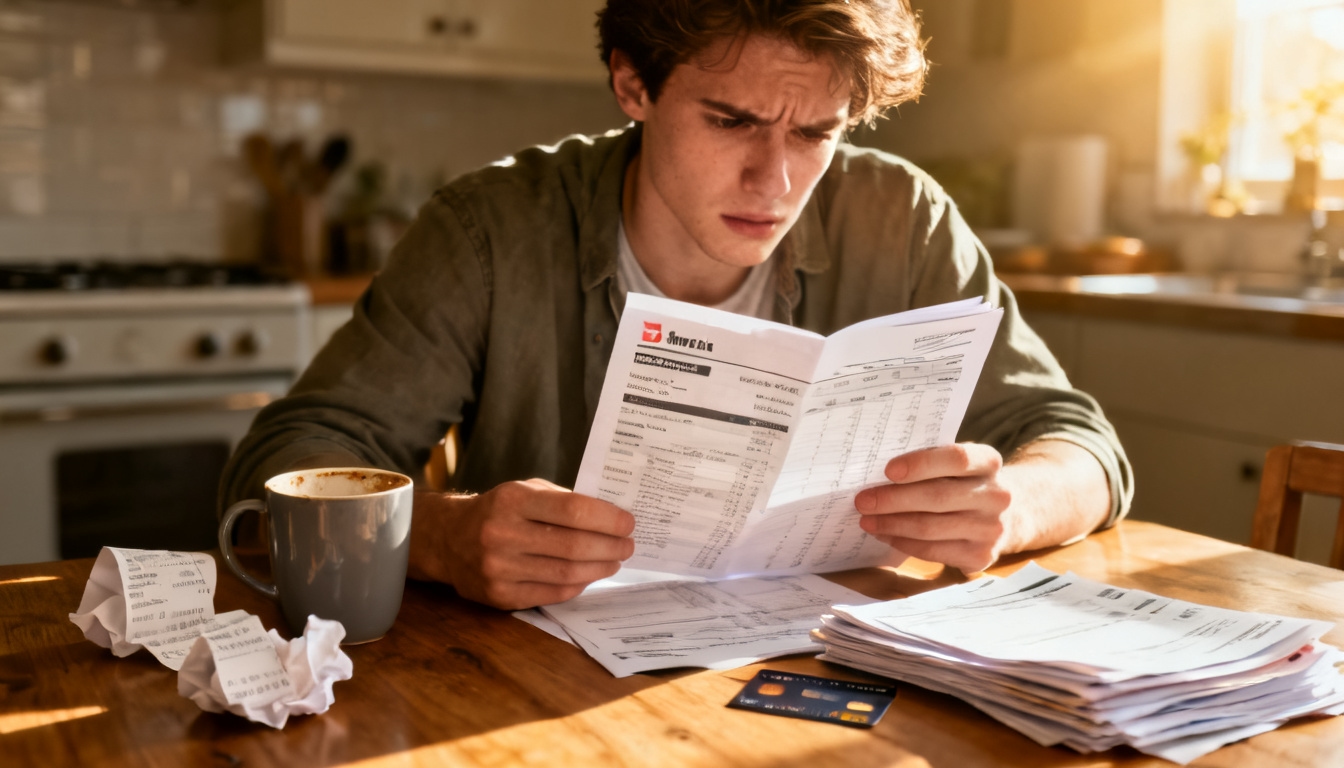
You check your account two days after payday and feel the drop before you even do the math. The money came in, the bills came out, and somehow you are already wondering why you are broke again.
Why This Happens
Payday feels like relief, but for many people it is also the moment every delayed expense wakes up at once. The rent, the utility bill, the gas tank, the grocery run, the school payment, the subscription charges, the card minimums, and the one thing you forgot about all seem to arrive at the same time. So when you say, “I just got paid and I am already broke,” you are usually describing a cash flow problem, not a character flaw.
A lot of people think being broke after payday means they are careless, but the reality is usually more ordinary and more frustrating. Money comes in on a schedule, but life does not spend on a schedule. One week feels manageable, then a car tire, a birthday, a doctor visit, or a last-minute household expense pulls the balance down faster than expected. What feels sudden is often just the visible part of expenses that were already in motion.
There is also a psychological reason this hits so hard. Payday creates the feeling that you have more room than you actually do, so the brain starts spending from relief instead of from reality. That is why people often make the most expensive decisions right after being paid: they finally feel caught up, they want to breathe, and they reward themselves for surviving another cycle. The problem is not the celebration itself, but the lack of boundaries around it.
This is usually where people realize their money is not random, it is patterned. If you keep ending up broke right after payday, the issue is often less about one bad month and more about a repeated sequence: income arrives, pressure eases, spending expands, then the next wave of bills exposes how little margin was actually there. Once you see that sequence clearly, the situation becomes easier to understand, even if it is still uncomfortable.
The Hidden Pattern Behind It
The hidden pattern is that many people live in a near-constant state of financial compression. There is not enough space between income and expenses for anything to sit still, so every paycheck gets assigned before it even lands. When that happens, money never feels available for long, because it is already mentally spent on obligations, obligations, and more obligations. You are not enjoying the paycheck so much as moving it through a funnel.
A second pattern is what happens emotionally right after the deposit hits. The account balance rises, and the brain reads that as safety, even if the next ten days are already spoken for. That small spike in comfort can lead to accidental overspending because the body responds to relief faster than the budget responds to logic. In other words, the mind sees breathing room where the calendar sees bills.
Another pattern is the way people underestimate all the small leaks. It is not always one large mistake that empties the account. It is a meal out because the day felt heavy, a few app purchases, a convenience item at the store, a ride instead of waiting, a streaming charge nobody noticed, and a tiny overage that never seemed worth tracking. By themselves, these moments feel harmless, but together they create the exact feeling of being broke too soon.
This is also why some people feel wealthier on payday and poorer three days later. Their spending rhythm is tied to emotion, not to the structure of the month. A paycheck gives a brief sense of control, but if the money is not divided by purpose, it evaporates into daily behavior. That is where a simple budgeting tool or spending tracker can be useful, not because it fixes everything, but because it reveals the pattern that the mind keeps smoothing over.
Common Mistakes People Make
One of the most common mistakes is treating every paycheck like it is extra money instead of income with a job to do. When the mind says, “I got paid, so I can finally catch up on myself,” it often translates into spending that was never accounted for. People are not always being reckless; they are often making up for scarcity, stress, and months of feeling deprived. The problem is that relief can be expensive.
Another common mistake is forgetting that monthly expenses do not care about payday timing. If rent is due on the first and you get paid on the fifth, those four days can create a recurring pressure that makes every cycle feel broken. The mismatch between bill dates and pay dates is one of the most underrated reasons people feel broke after payday. A calendar-based budget or bill tracker can help make that timing visible instead of emotional.
People also tend to ignore the cost of being busy. When life is full, it is easy to spend on convenience and not notice how often convenience is being purchased. Delivery fees, takeout, gas, quick shopping trips, and automatic renewals can become a lifestyle without ever feeling like a decision. By the time the account is low, nobody can point to the one big thing, because the money left through the cracks.
A final mistake is waiting until the account is nearly empty before checking in with it. That creates a painful cycle where the numbers only get attention after they become stressful. At that point, people stop thinking clearly and start reacting emotionally. The same pattern repeats because the review comes too late to change the behavior that caused it.
Real-Life Patterns and Behaviors
This pattern usually shows up in very recognizable ways:
– You feel rich for 48 hours, then guilty for the rest of the week.
– You say you will “start fresh next payday,” but the next payday looks the same.
– You know the bills are there, but you still spend as if the balance is safer than it is.
– You track big expenses, but not the little daily ones that quietly stack up.
What makes this pattern so sticky is that it feels personal when it is often environmental. If your income barely covers essentials, then one disruption can domino into a whole month of stress. If your paycheck timing does not match your bills, then every cycle starts with pressure already built in. If your emotional energy is low, you are far more likely to spend for comfort, speed, or escape.
Many middle-aged adults also carry invisible financial fatigue. They have spent years handling family needs, work demands, household repairs, and life transitions, so they are not just managing money, they are managing exhaustion. When a paycheck arrives, it can feel less like a tool and more like a chance to exhale. That is why spending after payday is often less about desire and more about a nervous system trying to recover.
There is also a quieter behavior behind this: people often avoid looking too closely because they already suspect what they will find. Checking the account too often can feel discouraging, so they delay, guess, and hope. But that avoidance creates its own cost, because unclear money leads to reactive money. Once that becomes a habit, the same paycheck never seems to last long enough to become stable.
What Actually Helps
What actually helps is not a dramatic money makeover. It is reducing the gap between what you think is happening and what is actually happening. That usually starts with seeing the whole month at once, not just the payday moment. A budget worksheet, a bill calendar, or a simple spending tracker can show whether the problem is timing, overspending, surprise costs, or all three.
The next helpful shift is separating money by purpose as soon as it comes in. This does not have to be complicated. Some people use separate buckets for bills, groceries, gas, and flexible spending, and others use a basic digital budget to make the same division visible. The point is not perfection. The point is making sure the money does not arrive as one blurry number that gets emotionally spent before it is functionally assigned.
It also helps to notice your payday behavior without judging it. Ask what happens in the first six hours after a deposit, not because you are trying to police yourself, but because that window usually reveals the real pattern. Do you order food because you are tired? Do you shop because the balance feels encouraging? Do you pay one thing and ignore the rest? Those answers matter more than a generic list of money tips.
For some people, the fix is a cash flow tool. For others, it is a debt payoff calculator so they can see whether minimum payments are making the month feel tighter than it should. For others still, it is simply a spending limit that protects the first few days after payday from impulse decisions. Different tools help different habits, but all of them do the same basic job: they make the pattern visible before it turns into another stressful cycle.
What To Do Next
If you keep getting paid and then wondering where it all went, do not start with shame. Start with a single honest view of the month: what came in, what had to go out, and what disappeared without a plan. That is usually the point where the story changes, because vague stress becomes a trackable pattern.
The next useful step is to use a budgeting tool or paycheck calculator to map the money before the next deposit arrives. You do not need to build a perfect system in one sitting. You just need a clearer picture of where the money is going, especially in the first few days after payday when the pattern is easiest to miss.
If you want a calm way to begin, look at your last two pay periods and write down the same four things each time: income, fixed bills, variable spending, and the balance after one week. That small comparison often reveals the truth faster than any lecture ever could. It shows whether the issue is timing, habit, emotional spending, or a mix of all three.
And if you want one next step that feels manageable, choose one tool and use it for seven days only. A bill calendar, a budget tracker, or a simple calculator can give you more clarity than another week of guessing. Money patterns change slowly, but they do change when they are seen clearly and handled without drama.
Related Reading
Keep Exploring the Pattern
Watch more breakdowns of real-life money behavior on our YouTube channel.
If you want a clearer view of your monthly patterns, try the Salary Breakdown Calculator, the Subscription Cost Calculator, or the Bill Due Date Planner.
Disclaimer:
This content is for educational and informational purposes only and does not constitute financial advice. Always consult a qualified financial professional before making personal financial decisions.