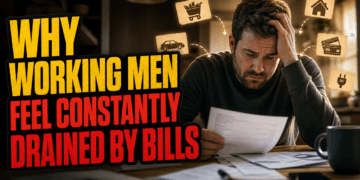


For many men over 50, the fear of an unexpected emergency is less about panic and more about arithmetic. A health scare, car repair, adult child’s crisis, or sudden home expense can expose how thin the margin really is. The worry often stays quiet because it feels practical, not emotional: if money is already committed to retirement, bills, and family responsibilities, one surprise can force a choice no one wants to make. That steady background concern is a money behavior issue as much as a financial one.
The emergency is rarely just one bill
When men over 50 say they fear unexpected emergencies, they usually mean more than the cost of the emergency itself. They mean the chain reaction that follows: money gets pulled from savings, monthly bills get tighter, debt becomes more likely, and retirement plans feel less secure. The stress comes from knowing that one surprise can disturb several parts of a financial life at once.
That is why the fear often stays quiet. It is not always dramatic or visible. It shows up as a habit of checking balances too often, delaying decisions, or feeling uneasy about spending even on ordinary things. The emergency is only the trigger; the real fear is what happens to the whole system after it arrives.
Why this worry gets sharper after 50
By the time many men reach their 50s, they are usually carrying more financial responsibilities, not fewer. They may still be supporting children, helping aging parents, paying down debt, or trying to catch up on retirement saving. At the same time, there is less room to recover from a mistake because the timeline before retirement is shorter.
That makes flexibility feel valuable in a way it may not have felt earlier in life. A younger household can sometimes absorb a setback with more time, more borrowing capacity, or more years of income ahead. After 50, the same setback can feel more permanent because there is less time to rebuild the buffer.
The hidden pressure of “I should already have this handled”
Part of the fear is financial, but part of it is identity. Many men over 50 were raised to see themselves as the person who keeps things steady, solves problems, and does not make a fuss. So when money feels fragile, the reaction is often private embarrassment rather than open discussion.
That can make the anxiety harder to name. Instead of saying, “I’m afraid of an emergency,” the thought becomes, “I should be prepared by now.” That shift matters because shame tends to isolate people, while a clearer, more practical view makes it easier to act.
The result is often silence. Men may avoid talking about what would happen if the furnace failed, a spouse got sick, or they needed time off work. But quiet does not mean calm. Often it means the worry has no safe outlet.
Health costs are the kind of surprise that changes everything
Healthcare is one of the most intimidating categories of emergency spending because it is hard to predict and difficult to postpone. The research on healthcare debt in the United States describes it as a “silent fight,” which is a fitting phrase for the kind of pressure many older adults feel. Medical costs can arrive suddenly, and they can do more than drain cash—they can threaten the sense that a household has control over its future.
Unlike a planned purchase, a medical emergency does not wait for the right month. It can hit when money has already been allocated elsewhere. That is why even financially responsible people can feel vulnerable: being careful does not fully protect you from a system where the timing of the expense is outside your control.
For men over 50, this risk often feels personal because health and finances start to overlap more visibly. A body that needs more attention can become a budget problem, and a budget problem can become a source of anxiety about aging itself.
The emergency fund is really a freedom fund
A lot of advice frames emergency savings as a math problem. That is useful, but incomplete. For many people, the real value of emergency savings is not just paying a bill; it is preserving choice. It buys time to respond without immediately reaching for high-interest debt or making a rushed decision.
The U.S. Department of Labor reminds readers that retirement savings are among the most expensive things many people will ever buy. That matters here because an emergency can force a trade-off between current stability and long-term goals. Without a buffer, a sudden expense can pull from the same pool meant for future security.
This is why men over 50 often feel especially exposed. They are close enough to retirement to see the consequences of every withdrawal, but still far enough away that a single setback can meaningfully slow their progress. The fear is not irrational. It is a signal that the household’s margin is thin.
A simple way to judge how exposed you really are
A practical way to think about emergency fear is to ask one question: how many normal expenses could disappear before things became unstable? That question is more useful than asking whether you feel “prepared,” because feelings can be vague while cash flow is concrete.
Try this quick check:
– How many months of essential expenses are covered by cash you can access quickly?
– If a medical bill, repair, or travel expense arrived next week, what would you pay first?
– Would you use savings, credit, or delay another bill?
– Which expense would cause the most damage if it arrived at the wrong time?
The point is not to create a perfect score. The point is to spot the weak point before it becomes a crisis. A household with no clear answer is usually the household most likely to feel fear in the background.
What men often do instead of naming the fear
When people are uneasy about emergencies, they often respond in ways that look practical on the surface. They put off maintenance, keep money in different accounts but do not fully track it, or tell themselves they will rebuild the buffer “after the next thing calms down.” Sometimes they respond by becoming overly cautious about every expense, even when the real issue is not spending but vulnerability.
There is also a common pattern of overestimating what a good income can protect. A decent salary helps, but it does not erase timing risk. If expenses and obligations are already high, income alone may not prevent the stress of a sudden bill.
This is why the worry can feel so persistent. It is not just about whether money exists somewhere. It is about whether money is ready when life refuses to wait.
A more useful response than trying to feel less worried
The goal is not to eliminate all concern. Some concern is rational. The better goal is to make the next emergency less disruptive by improving liquidity, reducing avoidable fixed costs, and deciding in advance which expenses can be paused if necessary.
That can start very small. A person who feels exposed does not need to solve every future risk at once. He needs a more realistic plan for the first surprise. That may mean building a starter reserve, separating short-term emergency money from long-term savings, or reviewing the most likely emergency categories in the household: health, car, home, and family support.
The emotional benefit matters too. When a person knows what would happen if the furnace failed or a medical bill arrived, the fear usually becomes more specific and less diffuse. Specific problems are easier to plan for than a vague sense that everything could collapse.
Quiet fear around emergencies is often the mind’s way of noticing that the margin is too thin. The answer is not stoicism. It is structure: enough cash access, enough planning, and enough honesty to turn vague dread into a workable plan.
Related Reading
- Why Men Over 50 Fear Unexpected Emergencies
- Why Men Over 40 Quietly Worry About Inflation
- Why Men Over 50 Fear Inflation More Than Ever
Keep Exploring the Pattern
Watch more breakdowns of real-life money behavior on our YouTube channel.
Browse the full Money Behavior Library to explore more patterns like this one.
If you want a clearer view of your monthly patterns, try the Salary Breakdown Calculator, the Subscription Cost Calculator, or the Bill Due Date Planner.
Explore more patterns in the Money Behavior Library — a growing collection of real-life financial patterns explained clearly.
Disclaimer:
This content is for educational and informational purposes only and does not constitute financial advice. Always consult a qualified financial professional before making personal financial decisions.