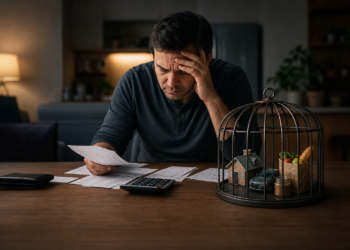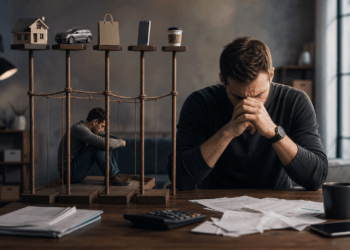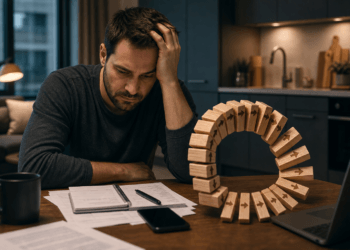

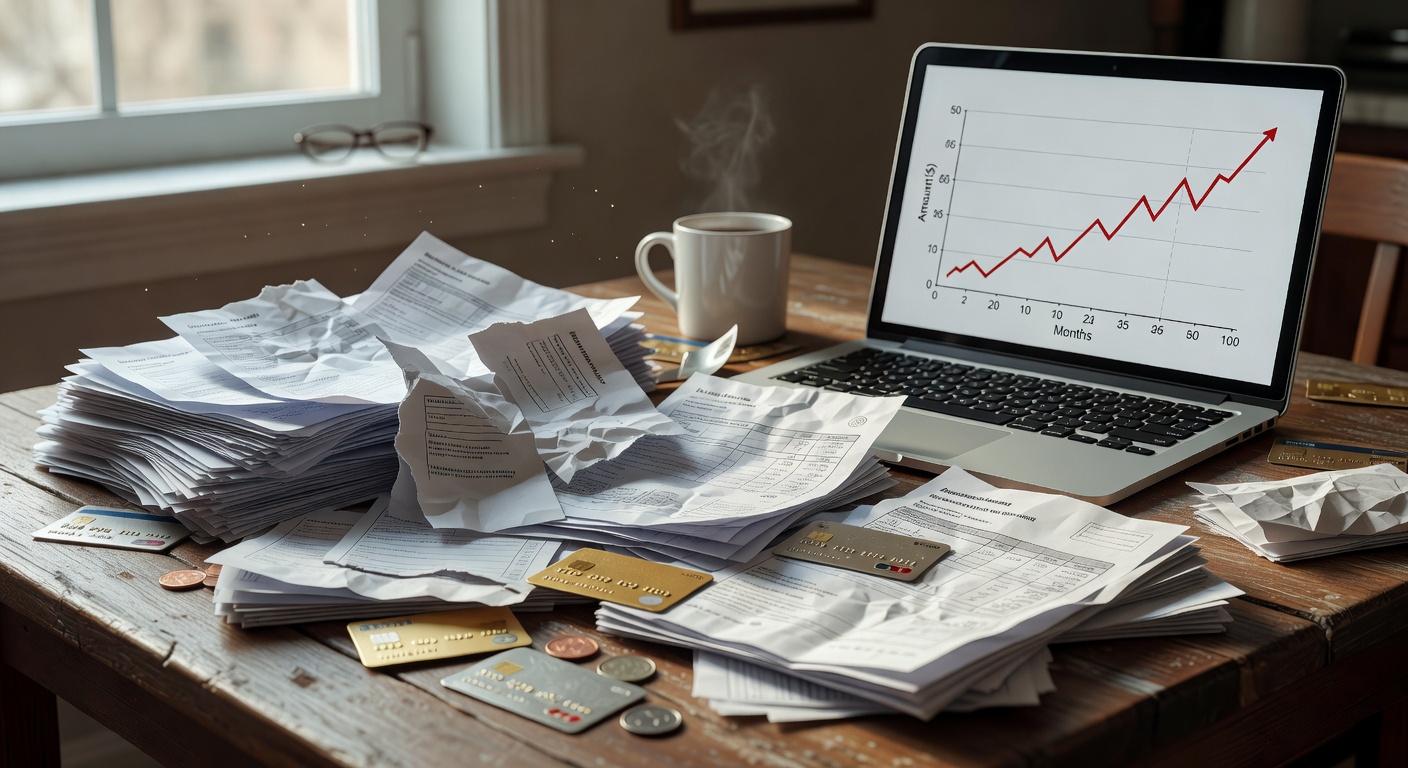
You look at the month and it does not make sense. Nothing huge changed, but somehow the money still leaked out, and now you are asking, “Why do my expenses keep increasing?”
Why This Happens
There is usually a moment when the numbers stop feeling like a budget and start feeling like a mood. You check your account, remember the groceries, the gas, the subscription, the dinner out, the repair, and then you realize the total is higher than it used to be even though your life does not feel dramatically different.
That is what makes rising expenses so frustrating. They rarely arrive as one obvious event. They show up as a series of ordinary decisions, each one small enough to ignore, until the month ends and the pattern is impossible to miss.
For many people, the real question is not “Where did all the money go?” It is “Why does everything cost more for me now than it used to?” That question is emotional because it points to a mismatch between what your life feels like and what your money is proving.
The answer is often less about failure and more about drift. Expenses rise when routines change, expectations rise, and old spending limits quietly stop matching the current version of your life. You are not usually overspending in one dramatic way. You are living inside an outdated money pattern.
This is why the problem can be hard to name. It feels random on the surface, but underneath it is often very structured. Once you see the structure, the whole situation becomes easier to understand.
The Hidden Pattern Behind It
Most rising expenses are not just about prices. They are about accommodation. Life expands around your habits, and your habits expand around whatever feels normal enough to repeat.
That is how a small convenience becomes a default. A delivery order becomes the answer after a tiring day. A higher utility bill feels acceptable because the house is fuller, colder, hotter, or simply less efficient than before. A subscription stays active because canceling it feels like too much effort for too little payoff.
The hidden pattern is often this: your spending does not rise all at once, it rises in response to friction, fatigue, and a desire to keep life running smoothly. The more exhausted you are, the more likely you are to pay for convenience. The more stressed you are, the more likely you are to justify a small purchase as a relief.
This is usually where people realize their money is not random, it is patterned. Your expenses may be increasing because your life has developed more pressure points, and money has become the tool you use to soften them.
A few common patterns show up again and again:
– “Just this once” becomes a weekly habit.
– Old prices stay in your memory long after the market changes.
– Small upgrades feel harmless because no single one looks expensive.
– Stress spending follows emotional fatigue, not logic.
Once these patterns become familiar, the numbers stop looking mysterious. They start looking like behavior.
Common Mistakes People Make
One common mistake is assuming the problem is a lack of discipline. That sounds responsible, but it is often too simple to be useful. Discipline is part of the picture, yes, but if expenses are rising because your life has become more complicated, then discipline alone will not explain it.
Another mistake is focusing only on the biggest bills while ignoring the regular leaks. People tend to track rent, mortgage, and insurance because those are easy to see. But the real increase often hides in food, convenience, transport, medical co-pays, school costs, gifts, online orders, and the dozens of decisions that feel too small to count.
A third mistake is thinking a single budget fix will solve a behavior pattern. A budget can tell you what happened, but it does not always tell you why you keep repeating it. If the spending comes from stress, fatigue, social pressure, or a need for control, the budget alone will not change the pattern.
People also make the mistake of comparing today to an ideal version of the past. They remember a time when they spent less, but they forget what life looked like then. Fewer obligations, fewer people depending on them, fewer expectations, or simply less exhaustion. The old numbers may be real, but they are not always a fair comparison.
This is why many people feel guilty before they feel clear. They think the problem is their character when it is often their pattern. And once guilt enters the picture, it becomes harder to examine the spending honestly.
Real-Life Patterns and Behaviors
Rising expenses often follow a few very human patterns. They do not look the same for everyone, but they usually feel familiar once you see them clearly. The details change, but the structure is often the same.
One pattern is lifestyle creep. Not always the flashy kind people talk about online, but the quieter version. You start with a convenience or upgrade that genuinely helps, and then it becomes part of the baseline. Over time, your standard of normal moves upward without a formal decision.
Another pattern is emotional compensation. After a hard day, buying something can feel like restoring balance. It is not always about pleasure. Sometimes it is about numbness, relief, or the feeling that at least one thing in the day is under your control.
A third pattern is invisible inflation in your own habits. You may still think of yourself as someone with the same spending style, even though your actual routines have changed. More takeout, more delivery fees, more last-minute purchases, more replacement items, more “I forgot” purchases. None of it feels dramatic in isolation.
There is also social drift. As your circle changes, your spending can rise to match it. The lunches get pricier, the celebrations get bigger, the expectations get less flexible. You do not always choose this consciously. You absorb it.
And then there is the simple pattern of fatigue. When you are tired, you are less likely to compare prices, plan ahead, or cook from scratch. Your brain naturally moves toward the easiest option. This is not moral weakness. It is what exhausted people do when they are trying to keep functioning.
What makes these patterns so sticky is that they are rewarded in the short term. Convenience reduces stress. Spending relieves pressure. Upgrades feel deserved. So the behavior repeats even when the long-term result is painful.
That is why the same person can feel disciplined in one area and loose in another. Money behavior is rarely consistent across all moments. It is reactive, situational, and deeply tied to the emotional energy available at the time.
What Actually Helps
What helps most is not dramatic restriction. It is seeing the structure of your expenses clearly enough to stop treating every month like a surprise. A good starting point is to separate fixed costs, variable costs, and pattern-driven costs. That third category is where the real insight usually lives.
This is where a simple expense tracker or budgeting tool can help more than another round of self-blame. Not because the tool is magical, but because it shows repetition. Once you can see how often the same type of spending appears, you can stop arguing with vague feelings and start working with actual data.
A spending calculator can also be useful, especially if your issue is gradual growth rather than one large leak. Seeing totals for delivery, subscriptions, groceries, fuel, or convenience purchases can make the pattern visible in a way memory cannot. Memory tends to minimize repetition. Numbers do not.
The most helpful change is often a behavioral one: slow the moment between urge and purchase. Not to punish yourself, but to create enough space to ask what the spending is doing for you. Is it solving a problem, relieving fatigue, avoiding discomfort, or filling a gap in the day?
This is also where a realistic budget matters. Not a strict fantasy version of your life, but a budget that matches how you actually live. If your budget ignores the way you really eat, commute, celebrate, and cope, then it will keep failing in the same predictable way.
Sometimes the real help is not cutting more. It is naming the expense category correctly. A lot of what looks like overspending is actually unplanned coping. Once that is honest, the solution becomes more specific.
What To Do Next
Start by looking at the last 30 days without trying to judge them. Group your spending into a few simple categories and look for repetition, not perfection. You are looking for the expenses that keep appearing when you are tired, rushed, emotional, or trying to make life easier.
Then ask one quiet question: which costs are growing because my life is changing, and which costs are growing because my habits are changing? That question matters because it separates reality from routine. If a cost is truly unavoidable, you will handle it differently than a cost driven by drift.
If you want something practical, use a basic budgeting tool or expense calculator to compare your monthly totals across categories. You do not need a complicated system to get useful information. You just need enough visibility to stop guessing.
From there, make one small adjustment in the category that repeats most often. Not a total overhaul. Just one friction point. One habit. One default. That is usually where change starts to feel real.
If your expenses keep increasing, the next step is not to become harder on yourself. It is to get clearer about the pattern. Once you can see it, you can work with it instead of being surprised by it again next month.
Related Reading
- Why Do I Always Feel Financially Stressed? The Pattern
- Why Am I Always Short on Money? The Real Pattern
- Why Am I Broke Even With a Job? The Real Pattern
Keep Exploring the Pattern
Watch more breakdowns of real-life money behavior on our YouTube channel.
If you want a clearer view of your monthly patterns, try the Salary Breakdown Calculator, the Subscription Cost Calculator, or the Bill Due Date Planner.
Disclaimer:
This content is for educational and informational purposes only and does not constitute financial advice. Always consult a qualified financial professional before making personal financial decisions.