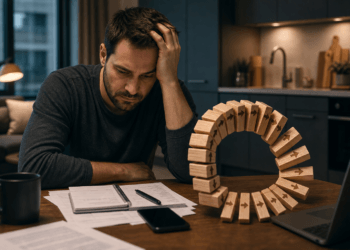

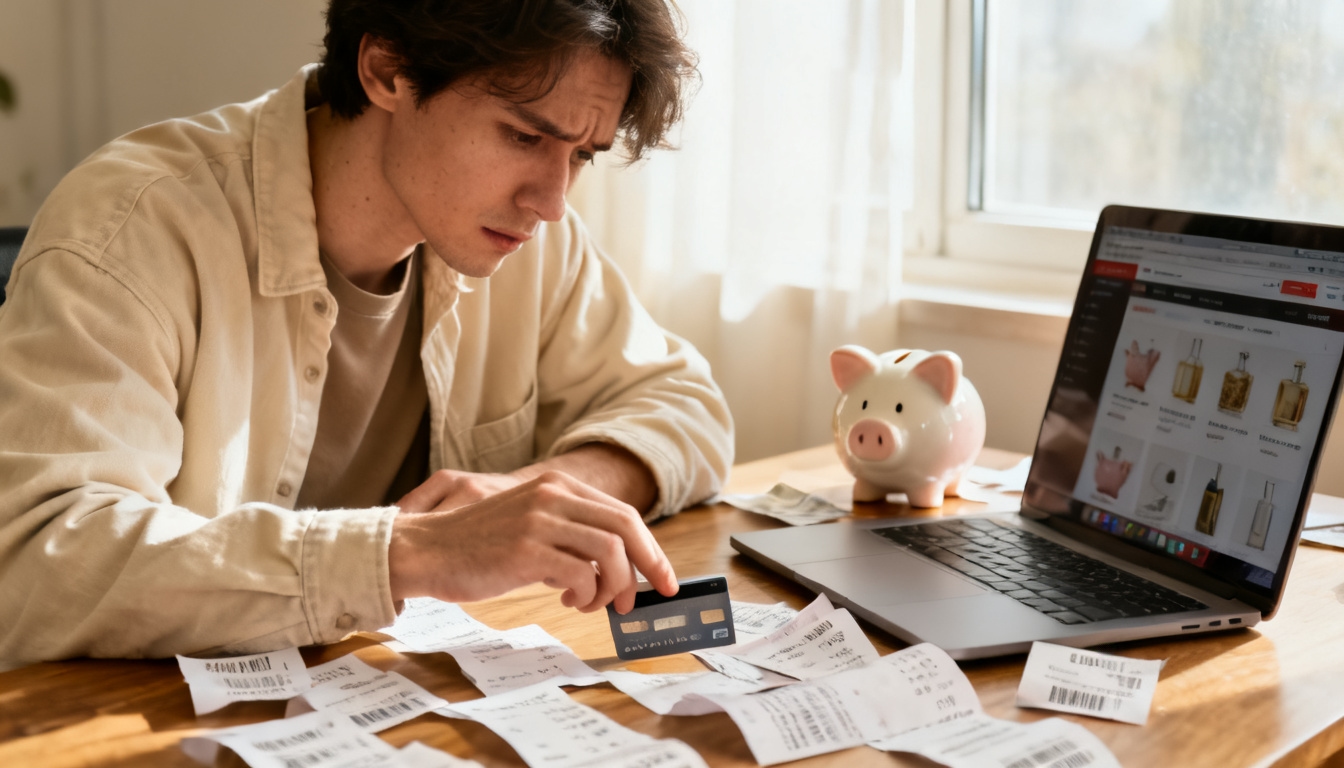
You tell yourself this is the last time, and then a small purchase turns into a whole cart, a delivery fee, and a familiar knot in your stomach. Why I Overspend Even When I Know Better is not really a question about math so much as a question about the pattern that keeps repeating after the decision is already made.
Why This Happens
Overspending rarely starts with a dramatic financial event. More often, it begins in the space between intention and impulse, where you already know what you should do but your body is reaching for relief, comfort, or a sense of control. That is why the thought can sound so clear in the moment, yet the behavior still happens anyway.
People usually think overspending means poor discipline, but in daily life it often works more like a fast emotional reply. A stressful workday, a quiet house, a feeling of being behind, or even a small sense of deprivation can make spending feel like a reasonable adjustment. The purchase is not always about the item itself; it is about what the item seems to solve for ten minutes.
This is why the question Why do I overspend even when I know better? lands so hard for many adults in midlife. They are not clueless about budgets. They have seen the statements, lived through the regret, and maybe even made the spreadsheet. What they have not always seen is the trigger-pattern that shows up before the spending happens.
There is also a difference between knowing and being available to act on that knowledge. In the abstract, you know the budget matters. In the moment, the brain narrows to the immediate reward, and the future consequence gets quieter. That shift is small, but it is powerful enough to explain why the same person can be careful for weeks and then suddenly overspend in one evening.
The Hidden Pattern Behind It
The hidden pattern behind overspending is usually not random choice. It is repetition. People tend to spend more when they feel emotionally depleted, mentally crowded, socially exposed, or unable to get a cleaner kind of reward. Once you notice that, the behavior stops looking like a mystery and starts looking like a loop.
A common loop looks like this: pressure builds, spending offers relief, guilt follows, and then the guilt quietly increases the pressure. That extra pressure makes the next impulse stronger, which is why overspending often continues even after a person has promised themselves to stop. The promise is real, but the emotional system underneath it never got addressed.
Another part of the hidden pattern is identity. Many adults overspend to preserve a version of themselves they think they should still be able to be. The nice dinner, the upgraded gadget, the extra outfit, or the convenient service can feel less like luxury and more like proof that life has not reduced them to scarcity. That makes the spending feel personal, not practical.
You may also notice that overspending is often strongest around transition points. Paydays, birthdays, holidays, family events, work stress, or the end of a draining month can all make money decisions feel less like decisions and more like pressure valves. This is usually where people realize their money isn’t random… it’s patterned.
The pattern is easier to see when you look at the trigger instead of only the transaction:
– I felt behind, so I spent to catch up emotionally.
– I felt deprived, so I spent to feel normal.
– I felt tired, so I spent to avoid effort.
– I felt frustrated, so I spent to get a quick reward.
Once the trigger is named, the behavior becomes easier to interrupt. Not because it disappears, but because it is no longer invisible.
Common Mistakes People Make
One of the biggest mistakes is trying to solve overspending with shame. Shame sounds productive because it feels serious, but it usually only makes the pattern more secretive. When people feel bad enough, they stop looking closely and start hiding from the numbers, which means the same behavior keeps repeating without any better understanding.
Another mistake is assuming willpower should work the same way every day. It does not. Willpower is affected by sleep, stress, conflict, hunger, mental load, and how many small choices you have already made that day. By evening, many people are not weak; they are simply worn down. That is an important difference, because it changes the solution from moral correction to pattern awareness.
A third mistake is treating every overspending episode as if it came from the same cause. Sometimes overspending is boredom. Sometimes it is loneliness. Sometimes it is rebellion after feeling controlled. Sometimes it is a form of self-reward after doing something difficult. If you only label the behavior as irresponsible, you miss the actual mechanism underneath it.
People also make the mistake of waiting for motivation to become stronger than temptation. In reality, the environment often matters more than motivation. A phone full of shopping apps, one-click checkout, saved cards, and endless targeted offers can make overspending feel frictionless. A budgeting tool can help, but it works best when it reveals the pattern, not when it merely tells you what you already feel guilty about.
Real-Life Patterns and Behaviors
If you look closely, overspending tends to show up in recognizable life scenes. It is the late-night online order after a hard conversation. It is the unplanned grocery run that turns into a mini reset. It is the “I deserve this” purchase after a week of carrying everyone else’s needs. It is also the slow leak, where small comforts add up until the statement arrives and the surprise feels bigger than the spending itself.
Middle-aged adults often carry a specific kind of money load. They may be supporting children, aging parents, a partner, or a household that never stops needing something. They may also be trying to preserve some piece of personal freedom inside a life that feels heavily assigned. Overspending can become one of the few places where choice still feels immediate and unquestioned.
Sometimes the pattern is not about wanting more. It is about wanting less friction. Delivery instead of cooking. Replacement instead of repair. A treat instead of a conversation. A purchase instead of a pause. These are small decisions on the surface, but over time they reveal a bigger behavior: spending as relief from effort.
The emotional logic usually sounds familiar once it is said out loud. It might sound like:
– I am too tired to think, so I’ll just buy it.
– I have been careful all week, so this is fine.
– Everyone else seems to be enjoying life more than I am.
– I can fix the budget later.
That last sentence matters because it shows how overspending survives. It borrows confidence from the future. The person spending believes tomorrow’s self will be calmer, more organized, and better equipped to absorb the consequences. But tomorrow’s self usually inherits the same fatigue, just with a larger bill.
This is also why money tracking tools can be strangely useful even when people dislike them. Not because they solve the problem for you, but because they show the pattern in a way memory cannot. A spending tracker, a budgeting app, or even a simple calculator can reveal when overspending is clustered around certain days, moods, or categories. That kind of visibility is often more powerful than another promise.
What Actually Helps
What actually helps is not a louder command to stop. It is understanding what the spending is doing for you and finding a smaller, less expensive way to get part of that same effect. If the purchase gives relief, the replacement does not need to be perfect; it only needs to interrupt the automatic link between discomfort and spending.
For some people, that means noticing the first signal rather than the last one. The first signal might be mental fatigue, irritability, scrolling, comparing, or the urge to “just look” at stores online. If you catch the moment early, you can delay the decision long enough for the emotional temperature to drop. Delay is often more realistic than denial.
It also helps to separate budget problems from behavior patterns. A budget calculator can show whether the numbers are actually tight, but it cannot tell you why a person spends when they feel low. A tracking tool can show you that spending spikes after work, after arguments, or during weekends, which turns a vague fear into something concrete. Concrete problems are easier to work with than abstract guilt.
The most useful shift is often from “How do I stop being like this?” to “What situation keeps activating this?” That question changes the focus from character to context. It also makes room for small corrections, like reducing friction before vulnerable moments, setting a cap for impulse categories, or creating a pause between the feeling and the purchase.
A calm response tends to work better than a dramatic one. Overspending patterns usually weaken when you make them easier to see and harder to do automatically. That might mean removing saved payment details, keeping a simple weekly spending view, or checking one category before a routine purchase. None of that is glamorous, but it is how patterns actually change.
What To Do Next
Start by looking for the pattern you repeat, not the mistake you regret. If you overspend most often when you are tired, isolated, stressed, or feeling deprived, write that down plainly. The goal is not to judge yourself more accurately; it is to see the sequence clearly enough that it stops feeling like a surprise.
Then choose one small tool that gives you visibility. A spending tracker, a budgeting app, or a simple calculator can help you compare the story in your head with the story in your transactions. Often, the first relief comes from realizing there is a pattern you can name. Once it has a name, it has an edge.
If you want a next step that feels practical rather than harsh, review the last two weeks of spending and look for the same emotional conditions. You do not need a perfect system to begin. You need enough clarity to see where the money is going and what feeling tends to arrive first.
That is usually the point where the whole thing becomes less personal and more workable. You are not trying to become a different person overnight. You are learning how your spending responds to your life, so you can interrupt the pattern before it gets expensive again. A quiet tool and a clear review are often enough to begin.
Related Reading
- Why You Keep Delaying Bills—Even When You Know They’re Due (Decision Fatigue)
- Why Am I Broke Even With a Job? The Real Pattern
- Why I Spend More When I Feel Stressed: A Hidden Pattern
Keep Exploring the Pattern
Watch more breakdowns of real-life money behavior on our YouTube channel.
If you want a clearer view of your monthly patterns, try the Salary Breakdown Calculator, the Subscription Cost Calculator, or the Bill Due Date Planner.
Disclaimer:
This content is for educational and informational purposes only and does not constitute financial advice. Always consult a qualified financial professional before making personal financial decisions.