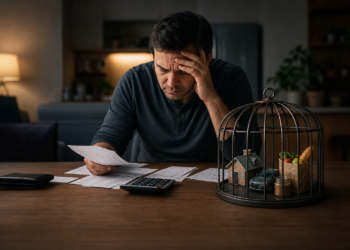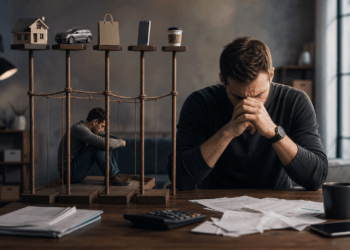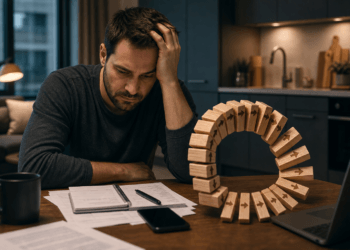

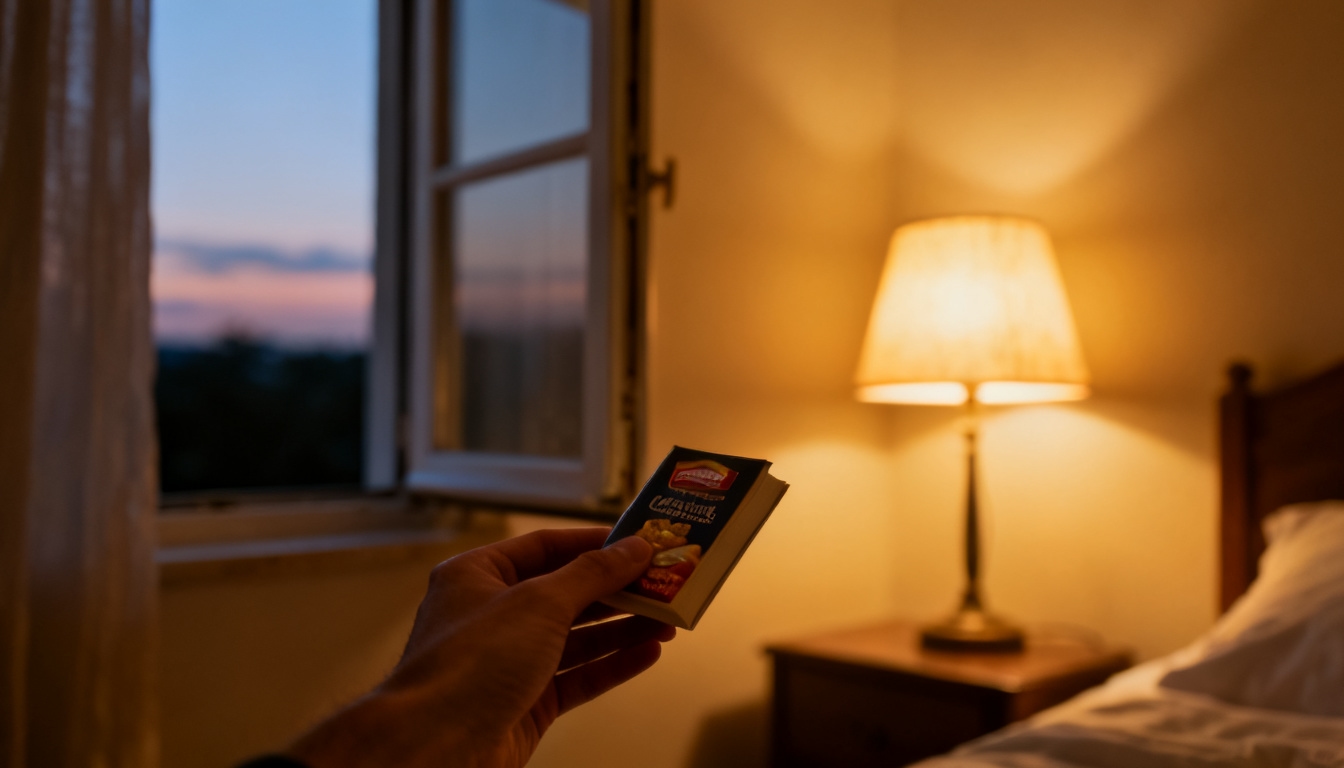
It happens after the day goes quiet: the phone is in your hand, the receipts haven’t been checked, and suddenly spending feels easier than it did at lunch. If you have ever asked yourself, “Why do I spend more at night?” you are usually not looking at a budget problem first — you are looking at a pattern.
Why This Happens
Night spending usually does not begin with a big decision. It begins with fatigue, relief, boredom, or the quiet feeling that the day has already taken too much out of you. By evening, the brain is less interested in careful evaluation and more interested in comfort, speed, and immediate reward. That is why an item that felt unnecessary at 2 p.m. can feel oddly justified at 9:30 p.m.
There is also a psychological shift that happens when the day is over. Work decisions, family decisions, obligations, and interruptions create pressure all day long, and spending can start to feel like a private release valve. The purchase is often not really about the thing itself. It is about the feeling of finally getting something back after being pulled in different directions.
This is where people often mistake pattern for personality. They tell themselves they are impulsive, weak with money, or bad at self-control. But repeated night spending is usually a predictable response to a predictable state: tired, unstructured, emotionally worn down, and alone with a device that makes buying effortless.
The money is not random. The timing is the clue. Once you notice that your spending rises when your energy drops, the behavior starts to look less like a mystery and more like a habit loop with a clock attached.
The Hidden Pattern Behind It
The hidden pattern is often emotional depletion disguised as convenience. During the day, your mind has to justify every choice. At night, that internal editor is quieter, and the gap between feeling and acting gets smaller. That is why late-night spending can feel almost automatic, as if your hand is moving before your reasoning catches up.
A lot of evening purchases are driven by what people think they deserve. After a hard day, spending can feel like self-recognition: “I worked today, so this is fine.” The problem is not the desire for reward. The problem is when reward becomes the only thing standing between you and emotional exhaustion. Then the purchase stops being occasional and starts becoming part of your nightly recovery routine.
There is also a very practical piece here: nighttime is often when fewer tasks compete for attention. The kids are asleep, the messages slow down, the house is quiet, and suddenly the mind notices all the small discomforts that were ignored earlier. That is when a person can start browsing, comparing, adding to cart, or ordering something as a way to fill the emotional silence.
In real life, this pattern often looks like one of these:
– Scroll, notice, buy, and justify
– Feel tired, feel deprived, then spend to “reset”
– Tell yourself you will look tomorrow, but order tonight
– Use spending as the reward for surviving the day
Once that sequence becomes familiar, the purchase is no longer a surprise. It is a script.
Common Mistakes People Make
One of the biggest mistakes is treating night spending like a willpower issue only. People try to force more discipline without looking at what the day is doing to them. If the evening version of you is drained, lonely, or overstimulated, then a strict rule alone will not hold for very long. The pattern returns because the conditions return.
Another common mistake is only tracking the amount, not the timing. Someone may know they are overspending but not realize that most of the damage happens between 8 p.m. and midnight. That detail matters. A budgeting app or spending tracker can show the pattern visually, and seeing the time stamp can be more revealing than seeing the total. The number is important, but the hour often tells the real story.
People also make the mistake of assuming the purchase is about need. Night spending is often about mood, not necessity. That does not make it frivolous in a moral sense; it just means the buying behavior is serving a different function than the one you admit out loud. It may be soothing anxiety, creating a sense of control, or giving the day a better ending than it actually had.
Another overlooked mistake is waiting until the end of the month to understand the damage. By then, the behavior feels abstract. It is harder to remember the emotional state that created the charge. The spending becomes a spreadsheet problem instead of a behavior problem, and that makes it easier to repeat.
Real-Life Patterns and Behaviors
The real-life pattern often starts earlier than the purchase itself. A person may skip lunch, work late, handle other people’s problems, and push through the day without a clean pause. By night, the body and mind are both looking for relief. In that state, spending can feel like a small, controllable pleasure in a day that felt mostly controlled by others.
Some people spend more at night because nighttime is the only time they feel unobserved. During the day, they are managing a role. At night, they are simply themselves, and that private space can trigger a different relationship with money. The order, the delivery, the streaming add-on, the late-night snack, the “quick” online purchase — each one can feel minor alone, but together they create a pattern of self-soothing through transaction.
For many middle-aged adults, this also connects to a deeper emotional tension: the desire to make life feel lighter after years of carrying responsibility. That can show up as upgrades, convenience purchases, or small treats that seem harmless in isolation. The pattern is not just about spending more. It is about trying to buy relief in a life that rarely slows down enough to offer it freely.
There is often a specific sequence behind it:
– Daytime restraint
– Evening fatigue
– Emotional justification
– Small purchase that feels deserved
– Quiet regret the next morning
That sequence matters because it explains why the same person can be careful with money all day and loose with it at night. The behavior is not inconsistent. It is context-dependent.
What Actually Helps
What helps most is not shame, but visibility. When people start noticing the exact hour, mood, and trigger behind each purchase, the behavior becomes easier to interrupt. A simple spending tracker, a bank app with category alerts, or even a basic note on your phone can reveal whether night spending is tied to stress, boredom, loneliness, or exhaustion. Once you can name the pattern, you can stop treating it like a surprise.
The most effective help is often environmental, not moral. If the phone is the gateway, then creating friction matters. That might mean logging out of shopping apps, removing saved cards, or putting a 30-minute pause between wanting and buying. A budgeting tool or cash flow calculator can also help if the issue is less about the purchase itself and more about not seeing the cumulative effect until it is too late.
Another useful shift is learning to ask a better question before buying: “What am I actually trying to feel right now?” That question interrupts the automatic loop. Sometimes the answer is rest. Sometimes it is control. Sometimes it is comfort after a hard conversation, a long commute, or a day that felt emotionally expensive. The answer does not always cancel the purchase, but it often changes the size and urgency of it.
The point is not to make night into a forbidden zone. The point is to separate a real choice from a reflex. When you can see the difference, money starts behaving more like a system you can understand and less like a secret habit that keeps happening to you.
What To Do Next
Start by looking at the pattern, not the guilt. Check your recent transactions and notice when the spending happens, not just how much. If most of it clusters in the evening, that is useful information, and it is often the first sign that your money behavior is responding to fatigue rather than lack of discipline.
Then use one small tool to make the pattern visible. A spending tracker, a budgeting app, or a simple calculator can show the relationship between time, mood, and cost in a way memory cannot. If you want the clearest next step, choose one tool and use it for seven nights. You are not trying to fix everything at once. You are just learning when your money becomes most vulnerable.
That is usually where people realize their money is not random. It is patterned. And once you can see the pattern, you can begin to change the conditions around it instead of fighting yourself after the fact.
Related Reading
- Why Do I Struggle With Money So Much? The Pattern Behind It
- Why I Spend More When I Feel Stressed: A Hidden Pattern
- Why Is It So Hard to Save Money? The Pattern Explained
Keep Exploring the Pattern
Watch more breakdowns of real-life money behavior on our YouTube channel.
If you want a clearer view of your monthly patterns, try the Salary Breakdown Calculator, the Subscription Cost Calculator, or the Bill Due Date Planner.
Disclaimer:
This content is for educational and informational purposes only and does not constitute financial advice. Always consult a qualified financial professional before making personal financial decisions.